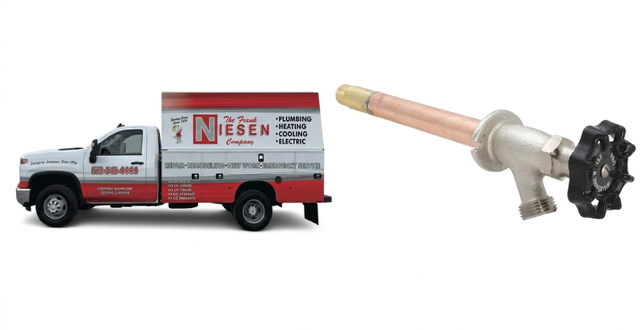
Spring is finally arriving in the Ohio tristate area, and our team at Frank Niesen Company knows how exciting it is to see the grass greening up in Butler, Clermont, Hamilton, and Warren counties. As we transition from the cold winter months into the warmth of the growing season, many homeowners are eager to get their gardens and lawns back in shape. However, before you pull out the garden hose and start watering your flower beds, our staff wants to ensure your home is protected from a common but invisible plumbing disaster. While many modern homes are equipped with specialized hardware designed to withstand the cold, a “set it and forget it” mentality can lead to significant water damage that often remains hidden until it is too late. Since 1884, we have helped local families navigate these seasonal transitions, and we want to share our expertise so you can enjoy a worry-free spring.
The Hidden Danger of “Frost-Free” Faucets
The Myth of Frost-Free
Many people believe that having a frost-free faucet means they never have to worry about their outdoor plumbing freezing, but our team has seen many instances where this is simply not the case. These faucets are designed with a long stem that keeps the actual valve and water supply deeper inside the heated portion of your home, which typically prevents the water from freezing and expanding near the exterior wall. However, these systems are not foolproof and require proper use to function as intended during the harsh Ohio winters.
The Hose Factor
The primary reason these faucets fail is actually quite simple: a garden hose left attached during the first freeze. When a hose remains connected, it prevents the water in the faucet stem from draining as it should, leaving a small amount of liquid trapped in the pipe. As the temperature drops, the trapped water freezes and expands with tremendous force, more than enough to compromise the integrity of the plumbing.
The Internal Burst
When this expansion occurs, the copper pipe or the faucet body itself often splits or cracks behind the insulation or deep inside your wall. This is a particularly tricky problem because the leak is completely hidden from view while the water is turned off during the winter. You will not realize there is a massive breach in your plumbing until the first time you turn the handle in the spring, at which point water can begin spraying directly into your home’s internal structure.
Why the Leak Goes Unnoticed
Because the burst happens behind the exterior siding or within the foundation wall, the water does not always spray out of the spigot where you can see it. Instead, the high-pressure stream may flow directly into your basement, crawlspace, or wall cavities, potentially leading to mold growth and structural damage if not caught immediately. Our staff emphasizes that just because you see water coming out of the hose does not mean everything is functioning correctly, as some of that water could be flooding your interior space.
Your Step-by-Step Spring Startup Process
Step 1: The Interior Shut-Off Valve
The first step our team recommends is locating the dedicated shut-off valve inside your home, usually found in the basement or a utility room near where the outdoor pipe exits the house. You should open this valve very slowly and stay alert for any immediate sounds of rushing water or dripping, which could indicate a problem before you even head outside.
Step 2: Testing the Outdoor Spigot
Once the interior valve is open, go outside and turn the outdoor faucet handle to the “on” position to clear out any air and check the flow. Our staff suggests checking for consistent water pressure and looking closely for any dripping from the handle or the base of the fixture where it meets your siding. If the pressure seems lower than usual, it could indicate that water is leaking through a crack elsewhere in the line.
Step 3: The “Listen” Test
After you have tested the flow, turn the outdoor faucet off and head back inside to the location of the interior pipe. Stand quietly and listen near the wall where the pipe exits the house; if you hear any hissing, humming, or running water sounds while the faucet is closed, it is a definitive sign of a burst pipe within the wall. This simple auditory check is a necessary part of a safe spring startup and can save you from a very expensive cleanup.
Specialized Care for Irrigation and Backflow Testing
For homeowners with built-in lawn irrigation systems, the spring startup process requires an extra level of professional attention. Our team offers specialized Backflow Testing, a critical service for any Ohio resident with a sprinkler system to ensure their family’s safety. This process is required for compliance and involves checking the devices that prevent contaminated irrigation water from flowing backward into your clean drinking water supply. Keeping your system up to code is a key part of maintaining a healthy home and protecting the public water grid in our local communities.
Protect Your Ohio Home with Frank Niesen Company
For 140 years, Frank Niesen Company has been the name Greater Cincinnati families trust for honest and dependable plumbing expertise. We are proud to serve Butler, Clermont, Hamilton, and Warren counties with the same dedication to quality that our family has maintained since 1884. Whether you suspect a hidden leak behind your walls or you are ready to schedule your annual backflow certification for your sprinkler system, our experienced staff is here to provide the professional inspection you need. We invite you to reach out to us to ensure your home is ready for the season ahead. To get started, please contact Frank Niesen Company today to schedule your outdoor plumbing tune-up or backflow test.